Have you ever wondered why some patients with Botox look stuck or emotionless while others look youthful and happy? Injections look different on everyone, however, the outcome mainly depends on what you ask for. Given that, what’s the deal with bad botox?
How Does It Work?
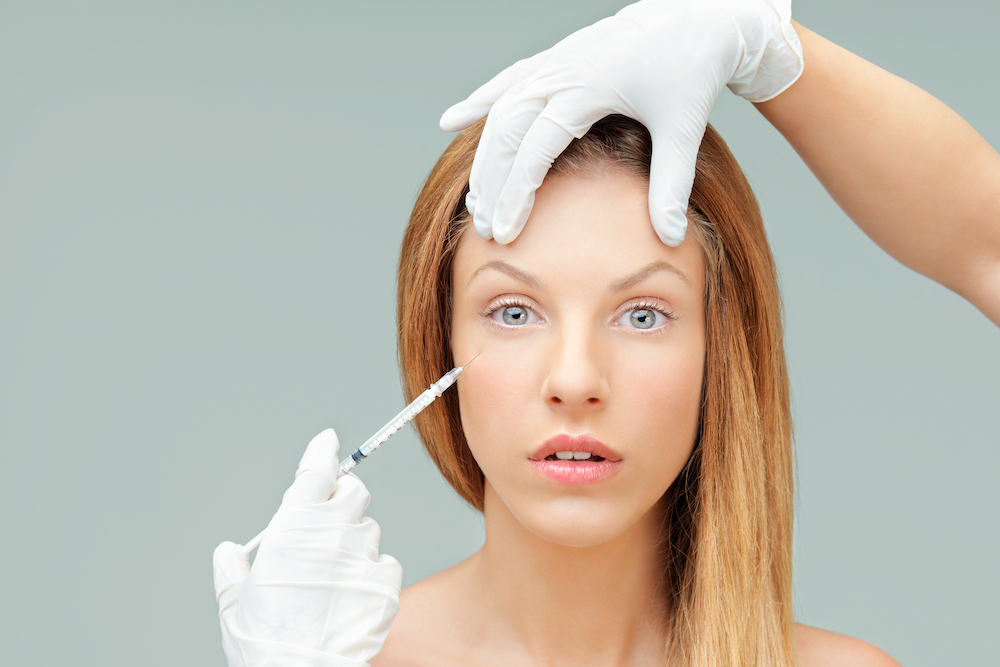
Botox is a protein made from botulinum toxin. Although it is technically labeled a “toxin,” it is still absolutely safe to use in small doses and when administered by a board-certified plastic surgeon. The injection blocks nerve endings from transmitting signals to the muscle, which results in muscle paralysis. This effect weakens or “paralyzes” the targeted muscles in your face.
While Botox is best used to treat unwanted wrinkles, it may also be used to reduce migraines, correct crossed eyes, fix eyelid spasms, combat excessive sweating, and other muscle conditions.
While many patients receive injections as a way to prevent signs of aging and wrinkles, patients may overdo it and completely rob their face of emotional expression.
Bad Botox: What’s the Deal?
We’ve all seen a celebrity or two with an expressionless face. While most people associate the “frozen face” look with Botox, it’s important to know that not every patient leaves looking like a wax figure.
So, what’s the deal? Why do some people look good with Botox, while others don’t? It’s a simple answer: They are totally overdoing it.
Here are a few reasons why some people walk around with bad botox results:
- Too much too soon. Some stars like Jenny McCarthy admit to having treatments every two months. Generally, we recommend treatments every three to six months. Receiving repetitive treatment ahead of schedule will definitely tamper with the desired “natural” post-injection outcome.
- When patients ask for injections only over the central area of their forehead, they may see a dramatic lateral brow arch. Luckily, this can be easily fixed by injecting Botox over the lateral forehead area.
- In very rare cases, a patient may see their upper eyelid droop. This can happen when the protein seeps into the muscles that raise the upper eyelid. Again, this is very rare and will wear off over time and is not permanent.
Those who are pregnant or breastfeeding should wait to receive cosmetic procedures and injections.
Frequently Asked Questions
Botox is a protein derived from botulinum toxin that, when injected in small doses by a board-certified plastic surgeon, blocks nerve signals to muscles, causing temporary muscle paralysis. This effect smooths out wrinkles and can also treat conditions like migraines, crossed eyes, eyelid spasms, and excessive sweating.
The 'frozen' look often results from overdoing Botox treatments, such as receiving injections too frequently or in excessive amounts. Over-treatment can rob the face of natural emotional expression, leading to an unnatural, stiff appearance.
It is generally recommended to have Botox treatments every three to six months. Receiving injections more frequently, such as every two months, can interfere with achieving a natural look and may increase the risk of undesirable effects.
In very rare cases, Botox can cause temporary drooping of the upper eyelid if the protein spreads to muscles responsible for lifting the eyelid. This side effect is not permanent and typically resolves over time.
When Botox is injected only in the central forehead area, it can cause an exaggerated arch of the lateral brow. This can be corrected by administering Botox to the lateral forehead muscles to balance the effect.
Pregnant or breastfeeding women are advised to wait before receiving Botox or other cosmetic injections, as safety during these periods has not been established.