
During the summer, it’s well-known that we need to protect our skin using sunscreen if we spend time outdoors in the sun. Slathering on the sunscreen can help block the sun’s harmful UV rays, preventing sunburn and premature wrinkles. However, besides wearing sunscreen, did you know that what you eat can help protect you from sun damage? So don’t overlook your diet, as there are foods that help sunburn and can give you that healthy summer glow you are after! While food can never replace sunscreen, you have extra reinforcement against UV-damaged skin when added together.
For a list of foods that help sunburn and sun-damaged skin, learn more about the four ingredients you should be adding to your diet this summer season.
Watermelon
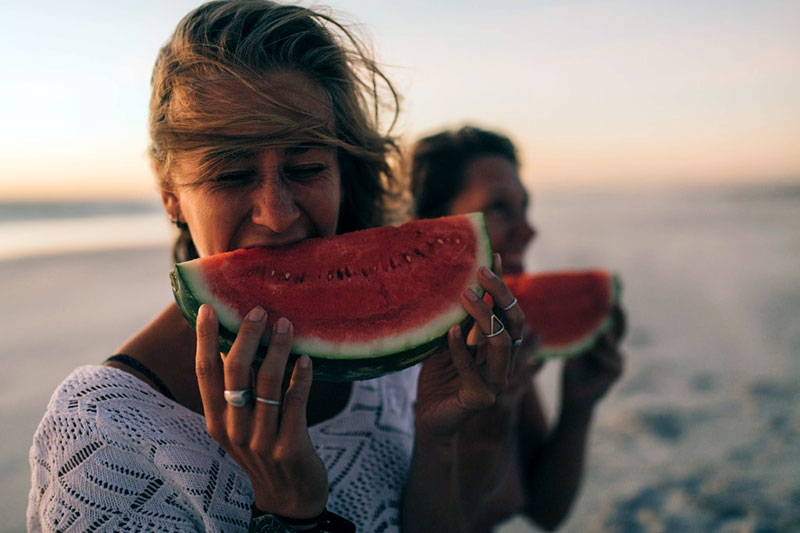
Watermelon is high in lycopene, which is known to help absorb UVA and UVB radiation. Researchers note that it can take a few weeks for your skin to become more photo-protective before the lycopene found in watermelons can act as a natural sunblock.
Green Tea
Drinking tea is known to have health benefits, and making some cooled green tea this summer can help protect your skin from the sun’s harmful rays. The high flavanols content can help protect against tumors induced by UV light, reduce skin damage from UVA light, and even help guard against the decrease of collagen.
Blueberries
A favorite summertime fruit, blueberries are delicious and easy to eat, alone or sprinkled into yogurt or cereal. While the wild varieties contain a higher percentage of nutrients, blueberries are high in vitamin C, which can help fight against wrinkles. Plus, its high antioxidant content makes it excellent at fighting off free radicals that can damage the skin.
Cauliflower
While we may naturally gravitate towards vibrantly colored fruits and vegetables, despite cauliflower’s pale appearance, cauliflower is high in antioxidants which are excellent at fighting off oxidative stress caused by free radicals. Plus, the alpha-amino acid histidine found in cauliflower stimulates urocanic acid production, which is known to help absorb UV radiation.
Frequently Asked Questions
Yes, consuming specific foods rich in antioxidants and other protective compounds can help reinforce your skin's defense against UV damage. While these foods cannot replace sunscreen, they provide additional protection by reducing oxidative stress and enhancing the skin's natural ability to absorb UV radiation.
Watermelon is high in lycopene, a compound known to absorb UVA and UVB radiation. Regular consumption over a few weeks can make your skin more photo-protective, acting as a natural supplement to sunscreen by helping to block harmful UV rays.
Green tea contains high levels of flavanols, which help protect the skin from UV-induced tumors, reduce damage from UVA rays, and prevent collagen degradation. Drinking cooled green tea during summer can support your skin's defense against sun damage.
Blueberries are rich in vitamin C and antioxidants, which help fight wrinkles and neutralize free radicals that damage the skin. Including blueberries in your diet can contribute to healthier, more resilient skin during sun exposure.
Cauliflower is high in antioxidants that combat oxidative stress caused by free radicals. It also contains histidine, an amino acid that stimulates urocanic acid production, a compound known to absorb UV radiation, thereby helping to protect the skin from sun damage.
No, diet cannot replace sunscreen. While certain foods can provide additional protection and help repair sun-damaged skin, sunscreen remains essential for blocking harmful UV rays and preventing sunburn and premature aging.